Followers

Showing posts with label Elderly Health and other issues. Show all posts

Monday, May 7, 2012

She got a new nose after 33 years!

Rakhi, who is from a small village in Gujranwala (in Pakistan), was married off to Ghulam Baksh when she was just 13. Belonging to the same clan, Rakhi, like most rural women, had no say in the wedding. She was regularly subjected to domestic violence.  Rakhi was 19 and already a mother of two — a boy and girl, when her husband chopped off her nose!  Her children grew up with their mother’s face always covered with a little cloth patch on her face and a veil on top of it at all times.  Now 33 year later Dr Hamid Hassan took up the challenge of constructing a new nose for her, using flaps of Rakhi’s skin. 

Read full article Violence against women: Years after he cut off her nose she smiled to spite his face

Tuesday, August 9, 2011

Skeletally, people are actually designed to live to 120!


Singapore's 113 years old Teresa Hsu

Hong Kong geriatric experts said on 7 August 2011 at the Elderly Health Day 2011 that good habits developed from at least middle age can contribute greatly to longevity and quality of life – lending credence to the Chinese saying that anyone can live to be 100.

According to the experts, “The typical belief is that you simply have to have the right genes to live for a very long time, but this is not always the case. As much as 70% of one’s longevity can be traced to lifestyle, including the way people eat, whether or not they smoke, and how much they exercise".

Read full article: http://www.asianscientist.com/topnews/teresa-hsu-elderly-health-day-2011/

Thursday, July 7, 2011

An age of ease

Now that we're retired...

We get caught in traffic jams, but we do not care...we 're in no hurry anyway...


We linger over our lunch and enjoy our food slowly...we need more time to munch anyway...

When they say 'excuse me ...we are closing soon...we make our way to the mall ...we need the walk to digest our food anyway....
We continue the party at our friend's and roll up our hair for all we care...we do not need to impress anybody anyway...

We talk about the good old days and make plans for another fun day... O, blest retirement! friend to life's decline -
How blest is he who crowns, in shades like these,
A youth of labor with an age of ease!
~Oliver Goldsmith

Tuesday, March 1, 2011

The maid paradox


I have an elderly father who is no longer able to look after his everyday needs. We need a maid to look after him. With his "idiosyncracies" and his strong preferences, a nursing home is out of the question.

He has 5 children, two being overseas and therefore are spared the responsibility of looking after the father's everyday needs and spared the everyday worries. Three of his children including me are still in the country but inviting him to stay with us (which we have tried) is a non-starter as he would never leave his house.

So, we depend on a live-in maid. Herein lies the paradox: we cannot do without a maid, but we also wish we do not have to have a maid. Changing the maid may result in other problems. Well, you know the English proverb 'Better the devil you know than the devil you don't know'. So to solve the problem we allow the problem to be.

Thursday, February 24, 2011

My date with 外丹功

Four months ago I joined a Waitankung 外丹功 class, with great trepidation, at the invitation of a friend. Now I find myself maybe a little bit more agile and energetic. Well, it is an ancient Chinese exercise, not a martial art but more of an exercise for health enhancement. The basic principle is to activate the Hsien Tien Chi (inner energy) inside the body so that the energy flows smoothly through the internal organs. I understand this is a good exercise routine for the middle aged.There is a discipline to Waitankung. I still cannot perform all the movements pAdd Imageroperly but hopefuly I will get there one day.

Well, with exotic names like "Tortoise Breath"面東龜息吐納功 , "Fluttering of a Bird"翼臂足翹一妙功 , "Lift of Pearls" 捧珠入覲安魄功"Big Crane Walk"大仙鶴步 , etc, there is reason enough to be motivated. hehe.. .

Wednesday, December 29, 2010

The Retirement Docs' Quiz


I took the Retirement Docs' Quiz and scored 167. This puts me in the top 40%, indicating that I am on my way to a successful retirement but need some fine-tuning in specific traits.

If you are retired or near retirement age...why not take the Quiz to find out which areas you may still need to improve? It takes only about 5 minutes.

Friday, May 21, 2010

The world's most tatooed senior woman!

I came across this accidently. The world's most tatooed senior woman, Isobel Varley. Apparently she had been radically modifying her body since 1986!


Credit to http://weirdnews.about.com/od/artisticendeavors/tp/Senior_Moments.htm

Monday, March 1, 2010

Why old age has its charms!


"Is there anything good you can write about the aging process?"... Nothing, nothing, nothing ..."Yes, there is. Some advantages are obvious. Movie discounts, seats on buses, Social Security and Medicare. Relief from the stresses of a 9-to-5 job and/or raising kids. Release from the tyranny of machismo and the menstrual cycle.Freedom is the greatest gift. "I do what I want when I want," is how a friend puts it. There's time to read, nap, travel, study or catch up with an old hobby or hubby. There's time to spend with children and grandchildren.


Extract from article Why Old Age Has Its Charms

Tuesday, June 2, 2009

Laughter can be a powerful medicine

It seems recent research showed that laughter contributes to positve effects of heart health.

Two studies presented at the American College of Sports Medicine's annual meeting in Seattle recently found that laughter not only can reduce stress, which can damage the heart, it can lead to improved blood flow, which can help ward off high blood pressure.

On a study done on a small group of healthy adults it was found that those who watched a comedy displayed improved "arterial compliance", i.e. the amount of blood that moves through the arteries at a given time. In another group who also watched a comedy it was found that there was more dilation of blood vessels. In both studies, the beneficial effects of laughter lasted for 24 hours.

Wednesday, May 6, 2009

Weight training keeps us young!

  • Weight training for the elderly help those who have lost mobility to regain some movement and even improve mental functioning.
  • Weight training for the elderly puts back muscle mass and strength that has been lost.
  • Weight training for the elderly strengthens the immune system helping them to avoid many illnesses.
  • Weight training for the elderly renews much of the suppleness to the skin that aging can take away
  • Weight training helps the body to manufacture greater amounts of hormones.

Reference: Weight Training for the Elderly

Mmmm...time to take out my son's irons !

Saturday, April 18, 2009

10-step memory workout for seniors


1. Exercise regularly
2. Stick to a healthy diet: Avoid sugar and saturated fat. And eat lots of antioxidant-rich fruits and vegetables such as blueberries, spinach, and beets.
3. Learn new things: Mastering activities you've never done before stimulates neuron activity.
4. Get enough sleep
5. Devise memory strategies: Make notes or underline key passages to help you remember what you've read.
6. Socialize
7. Get organized: Designate a place for important items such as keys and checkbooks. Keep checklists for things such as daily medications or items to pack when you travel.
8. Turn off the tube: Experts say too much TV watching weakens brain power.
9. Jot down new information
10. Solve brainteasers: Crossword puzzles, card games, and board games such as Scrabble improve your memory.

Credit to: http://my.88db.com/my/Knowledge/Knowledge_Detail.page/Health_Medical/?kid=10561

Friday, April 17, 2009

Internet Search good for brain health of the elderly


It seems recent research found that Internet search has a positive influence on the brain activity of elderly people. Internet search activities are found to be capable of activating key centers of the brain, which control logical processes of the mind or the areas of the brain that control decision-making and complex reasoning.

One very interesting finding is that Internet search activities are able to bring this about while an activity such as reading does not. The explanation for this is that compared with reading, the wealth of choices on the Internet requires that people make decisions about what to click on, which engages important cognitive circuits in the brain.


Hmm...looks like now I have a justification for hogging the computer...

Monday, April 13, 2009

Diogenes Syndrome or Squalor syndrome

I had been quite disturbed for the last 2 weeks ever since I witnessed the dilapidated and filthy condition of a house occupied by a relative. I had never seen anything near to it in my whole life! To top it all he is rich, with millions in his account and in shares, besides a few houses in prime locations. It disturbed me so much that I did an internet search on people living in such conditions and I found out that there is actually a behavioural disorder called the Diogenes Syndrome or sometimes called the Squalor Syndorme.

This rare form of behavioural disorder, usually found in the elderly, is characterized by extreme squalor, gross self-neglect, lack of self-consciousness about personal habits, untidiness, and compulsive hoarding of objects such as books, newspapers, tin cans, mails or garbage which could have been in the house for more than 10 years. This is accompanied by a self-imposed isolation and the refusal of external help. The person is often aloof, suspicious, emotionally moody, aggressive and reality distorting.

Diogenes syndrome is not a disease, it is a psychological condition. Very often this disorder affects old people who live alone. It is considered to be the end stage of a personality disorder.

Diogenes Syndrome is named after Diogenes of Sinope, the ancient Greek Philosopher who gave up mainstream life to live in poverty and made his home in a barrel (see the painting, credit to Wikipedia) .

It was found that those at high risk of lapsing into such squalor are often old people of the independent and domineering type, living alone, with poor or non-existent social links with their local community. When brought to the attention of medical professionals, either because of complaints by neighbours or during a physical illness, such people are usually found to be of sound mind, do not experience financial hardship and tend to come from an affluent socio-economic background. However, persons with the Syndrome can come from all social groups.

Rehabilitation of such people has been said to be possible, but difficult. I hope my relative can be helped, but currently I have no answer how to help him.

For more information, please read Diogenes syndrome: self-neglect and hoarding - not a pretty picture by Pat Salber, MD

Sunday, March 22, 2009

Words to live by

At the age of 97 years and 4 months, Shigeaki Hinohara is one of the world's longest-serving physicians and educators. Since 1941 he has been healing patients at St. Luke's International Hospital in Tokyo and teaching at St. Luke's College of Nursing.

After World War II, he pioneered Japan's top medical facility and nursing school. Today he serves as chairman of the board of trustees at both organizations. Always willing to try new things, he has published around 150 books since his 75th birthday, including one "Living Long, Living Good" that has sold more than 1.2 million copies. As the founder of the New Elderly Movement, Hinohara encourages others to live a long and happy life.

Some of his advice:

  • Energy comes from feeling good, not from eating well or sleeping a lot.
  • All people who live long — regardless of nationality, race or gender — share one thing in common: None are overweight. For breakfast he drinks coffee, a glass of milk and some orange juice with a tablespoon of olive oil in it. Lunch is milk and a few cookies or nothing when he is too busy to eat. Dinner is veggies, a bit of fish and rice, and, twice a week, 100 grams of lean meat.
  • Always plan ahead.
  • There is no need to ever retire, but if one must, it should be a lot later than 65.
  • To stay healthy, always take the stairs and carry your own stuff.
  • Don't be crazy about amassing material things. Remember: You don't know when your number is up, and you can't take it with you to the next place.
Please read the full article Words to Live By ,by JUDIT KAWAGUCHI

Saturday, March 21, 2009

Fashion for older women


Who says the older women cannot be fashionable? I found these fashionable outfit for the older women in http://www.silverts.com/ (above) and http://www.baybridgecentral.com/ (below)


The older woman can wear age-appropriate clothes that are also comfortable and fashionable.

Sunday, March 15, 2009

Laugh!

Do you know?

Laughter reduces the level of stress hormones.

  • Laughter increases the level of health-enhancing hormones.

Laughter increases the number of antibody-producing cells and enhances the effectiveness of T cells. All this means a stronger immune system .

A good belly laugh exercises the diaphragm, contracts the abs and even works out the shoulders, leaving muscles more relaxed afterward. It even provides a good workout for the heart.

Find Humor In Your Life: Instead of complaining about life's frustrations, try to laugh about them. Think of how it will sound as a story you could tell to your friends, and then see if you can laugh about it now. With this attitude, you may also find yourself being more lighthearted and silly, giving yourself and those around you more to laugh about. Approach life in a more mirthful way and you'll find you're less stressed about negative events, and you'll achieve the health benefits of laughter.

Read the full artivle: The Laughing Cure by Elizabeth Scott, M.S

Tuesday, March 10, 2009

New framework of aging for midlifers


Upon reaching the mandatory age of retirement, many retirees now do not automatically change into a traditional retiree. Many of my peers continue to work, stay active and productive and do not act or feel like their parents did at the same age.

In her book "Don't Stop the Career Clock" , Dr. Helen Harkness defines the new stages of aging that many midlifers are adopting as their framework for living:

• First Midlife: 40-60
• Second Midlife: 60-80
• Young Old: 80-90
• Elderly: 90 and above
• Old-Old: 2-3 years to live

Saturday, March 7, 2009

Optimism and effective coping styles keys to aging successfully

Researchers have defined successful aging as an absence of or low level of disease and disability. Now, a fascinating new study of more than 500 elders aged 60 to 98 challenges that notion.

It turns out that people who think they are aging well are not necessarily the healthiest individuals. Optimism and effective coping styles (or attitude) were found to be the keys to aging successfully rather than traditional measures of health and wellness.

The study used subjective reports by the participants, all of whom lived independently, and the sample of individuals matched the national averages of medical and mental health conditions. Also, those who regularly engaged in such activities as reading and writing and community socializing gave themselves higher scores than those who did not. And in contradiction to longtime received wisdom, volunteer activities were not found to exert the same influence on participants.

Thus, those things leading to successful aging are well within an individual's control. The key is adopting personal coping mechanisms as difficulties come along, and remaining as physically, socially, and mentally active as possible in one's circumstances.

The findings above were released at the American College of Neuropsychopharmacology's (ACNP) Annual Meeting, the research was conducted at and funded by the Sam and Rose Stein Institute for Research on Aging at the University of California-San Diego (UCSD) School of Medicine.

Saturday, February 28, 2009

Basically we have to look after ourselves

Today I visited my 72 year old cousin who broke his leg and some rib bones as a result of an accidient. Everyone worry that being single and having no children he would face the problem of not having a support system when he leaves the hospital. Fortunately he is not poor. So checking into a good well run nursing home until he can be independent would be an practical option.

This reminds me of the time when I broke my kneecap some 8 years ago. Looking back I basically helped myself, although I could not walk at all for 6 months and only managed to move around with crutches the next 6 months. I remember when I went out (normally to the hospital for follow-ups or to the hypermarket to buy provisions), I had to wheel myself to the car, stood on 1 leg and folded the wheelchair to put into the car. When I reached my destination I would get out of the car on 1 leg, take out the wheel chair and then wheel myself to my destination. At home I cleaned the house on my wheelchair and cooked standing on 1 leg. Sometimes it was scarry when I imagined that I may never walk again and I had bouts of depression and cried alot. Fortunately with God's grace, I came out of the mess.

Basically we have to look after ourselves. We have to prepare ourselves as much as possible—at least, as much as it is up to us. We have to exercise to keep healthy as long as is possible, keep the mind active and happy and put aside a reasonable amount of savings for nursing care when the eventuality arrives.

Tuesday, December 23, 2008

Okinawa holds the record for longevity

Okinawa in Japan holds the record for longevity and centenaries of the world and is the only place on the planet where 80-90 year-olds live like persons 30 years younger.

It is here that you see 100 year-old persons who are not even thinking about retirement. On Okinawa, there are 457 persons aged 100 or over, an average of 35 for each 100,000 inhabitants. It is the highest rate in the world. The Okinawa inhabitants reach ages similar to the Japanese average: 86 for women and 78 for men. But the real shocking factor is not that Okinawa people reach these ages, but that they grow old in a much better state. The statistics reveal a significantly lower risk of heart attack and stroke, cancer, osteoporosis, Alzheimer.

Decades of research show that there are two main factors behind the longevity on this island: alimentation and a healthy lifestyle that experts believe can be imitated.
The traditional diet of Okinawa consists of portions made of a bowl of cooked food and a fruit. Okinawans eat seven portions of vegetables and fruits daily, seven of cereals and two of soy products. They take various portions of fish weekly and, very sporadically, meat and dairy products. Overall, their diet is low in calories and contains a lot of vegetables.

You can see persons aged 90-100 on motorcycles or mountain bikes on the streets of Okinawa, and most of them practice karate, kendo, dancing, walk daily several kilometers, and even work on vegetable gardens and after that sell the products. They are rather preoccupied by hobbies, but linked to a social network that makes them feel connected to the environment and their fellows, and helps develop their spiritual side. Physical activity is not isolated, but has an objective, making the elders feel active members of the community. Another factor in Okinawa is that people take care of one another, forming more coherent and supportive links than in the western world.

In the center of the island, you can now find a big store with a big billboard reading, "Okinawa, the world capital of longevity," which also offers the ingredients of longevity: brown sugar "made of Okinawa cane", kombu, tofu and other products, all of them supposed to prolong your life.

要 開 開 心 心 過 每 一 天!

Our Father's 100th Birthday celebration on 24 July 2011

Our Father's 100th Birthday celebration on 24 July 2011


I am 100 today!


Some happy memories 15.7.2007


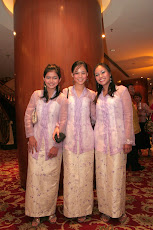
Sister Wan Lan in her splendorous Kebaya nyonya

Zuraida, my Secretary who was with me for 6 years when I was still working in the Government, accompanied by her son

My sister Wan Lan on the extreme left standing with me and my closest friends of several decades (Meilina to my left, Esah sitting left and Norhayati sitting right)

Tan Sri Arshad and Tan Sri Shahrizaila arriving for the reception

Brother-inlaw Ching

Nephew Meng, his girlfriend Jane, Sister Wan Lan and good friend Ivy helping out with guest registration

Offering tea to grandfather Woon Sang Chew, as a mark of love and respect

My good friends Prof Noor Hadjar from UiTM and Hearry from MAS

The entrance to the hall

me in the middle and cousin in law Anita Woon

Fedelia and her best friends, Yin Lee and Amalia, the three pretty flower girls

Daughter Fedelia in a pensive mood

The main Table

The pelamin

Whimsical flower girl niece Sara

Nephew Meng and girlfriend Jane

Good friend Wan Zawiah's daughter Nadia contributing a song

My three children L-R: Second son Farouk, only daughter and youngest Fedelia and elder son Feris